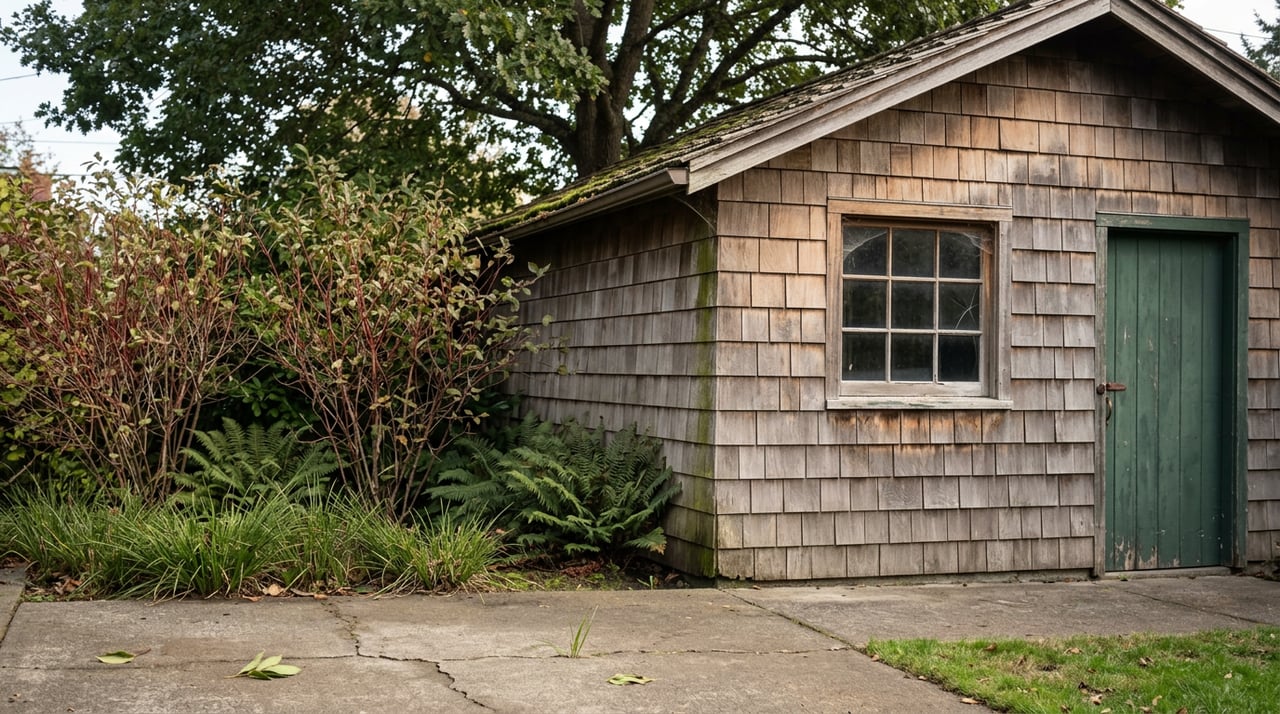
In the first days of January 2026, a king tide lined up with a storm surge, low atmospheric pressure, and heavy rainfall runoff into San Francisco Bay. In Marina Village and Mariner Cove, the two Corte Madera neighborhoods built on filled baylands in the 1950s, the water came up into garages, driveways, and backyards. The Town documented it as a five-day event, from January 1 through January 5, and spent the following months running recovery workshops, pop-up permitting hours, and a voluntary damage assessment.
None of that changed a single line on the FEMA flood map that every Corte Madera closing still references. The Special Flood Hazard Area for zones AE and VE sits exactly where it sat before the storm. What changed is something most sellers, and more than a few agents, don't realize is a separate system entirely: the personal-knowledge disclosure duty that exists independent of any map.
Two Forms, Two Different Triggers
California runs two disclosure documents on every residential sale, and they don't answer to the same authority.
The Natural Hazard Disclosure Statement, required under Civil Code sections 1103 through 1103.14, is a box-checking exercise built entirely on official government maps. If a FEMA Flood Insurance Rate Map places a parcel inside a Special Flood Hazard Area, the box gets checked. If it doesn't, it doesn't. The seller isn't asked what happened in their backyard. The seller is asked what the map says.
The Transfer Disclosure Statement, authorized under Civil Code section 1102, works the opposite way. It asks what the seller actually knows: water intrusion, flooding, drainage problems, repairs made because of any of the above. This is a knowledge-based duty, not a map-based one, and it applies whether or not the property falls inside a mapped hazard zone.
| Document | What triggers it | What it captures |
|---|---|---|
| Natural Hazard Disclosure Statement | FEMA flood zone maps (AE, VE, and related designations) | Whether the parcel sits inside a mapped Special Flood Hazard Area |
| Transfer Disclosure Statement | Seller's actual knowledge | Known flooding, water intrusion, and related repairs, regardless of map status |
A seller in Marina Village whose garage took on water in January still owes a truthful answer on the TDS. The NHD checkbox, meanwhile, will read exactly as it did in December.
Why the Map Didn't Move, and Probably Won't For This Kind of Event
There is one mechanism that can force the NHD checkbox to catch up with reality before FEMA formally redraws a flood map. Under Civil Code section 1103.2, if FEMA issues a Letter of Map Revision confirming a property sits inside a Special Flood Hazard Area, the seller must mark the box "Yes" even before the published map catches up, and attach the letter to the disclosure.
A single tidal flooding event, however severe, doesn't issue a Letter of Map Revision. That's a separate, slower federal process tied to remapping studies, not storm response. Corte Madera's current Special Flood Hazard Area still traces back to the original 1977 FEMA Flood Insurance Study, which found that flooding in town concentrates in the low-lying areas reclaimed from the Bay's marsh and tidal lands, generally in and east of Madera Gardens and the lands north of Paradise Drive. The Base Flood Elevation the Town uses for new construction in that zone is 10 feet NAVD. None of that shifted because of five days of king tides in January.
That gap between what happened on the ground and what the map still says is exactly why the personal-knowledge disclosure duty matters more here than in most transactions.
Why These Two Neighborhoods, Specifically
Marina Village and Mariner Cove aren't flooding because of one unlucky storm. They're built on filled baylands from the 1950s, and the Town's own shoreline adaptation planning describes those neighborhoods as having settled up to four feet in some areas since construction, with subsidence continuing at up to 1.4 inches per decade. More than 500 homes sit across the two neighborhoods.
A king tide is one of the highest tides of the year, occurring naturally five to six times annually and predictable well in advance. When one lines up with a storm, water levels rise higher than either event would produce alone.
That combination of gradual settling and periodic king tides is why the Town's own materials describe backyard, garage, and driveway flooding in these neighborhoods as a recurring pattern rather than an anomaly. A seller who has lived through more than one of these events, even minor ones, is holding knowledge that belongs on a Transfer Disclosure Statement regardless of what any single map shows.
The Paper Trail a Buyer's Agent Will Ask About
Due diligence on a Marina Village or Mariner Cove listing now runs deeper than the standard NHD and TDS forms. A buyer's agent working this market carefully will likely ask about:
- Whether the seller completed the Town's voluntary Flood Damage Estimate Form, submitted in the months following the January event to help staff gauge real-world impact.
- Any building permits pulled through the Building Division's pop-up assistance hours, held January 26 and February 2, 2026 at San Clemente Park on Paradise Drive, for flood-related repairs.
- Attendance at the January 28 Flood Recovery Workshop, held with the Town's Flood Board at Cove School's Cove Gallery on Golden Hind Passage, where residents received guidance on recovery resources and permitting.
- Any application for an SBA disaster loan, made available after Marin County met state and federal thresholds for Individual Assistance following the storm.
The Town's own after-action reporting, presented to the Town Council on May 19, 2026 and developed with Interim Public Works Director Chris Good, Flood Board Chair Nathan Blomgren, and Flood Board Vice Chair Sachi Itagaki, is a matter of public record. A seller who tries to leave any of this out of a listing conversation is betting that a buyer's agent won't ask, and in this market, that's a bad bet.
The One Disclosure That Actually Helps: the CRS Discount
Not everything in this story works against a seller. Corte Madera participates in FEMA's Community Rating System at Class 6, which translates into a 20 percent discount on flood insurance premiums for policies tied to the town's NFIP community number, 065023. That discount is worth roughly $270 a year compared to the Class 7 rate the town held previously, and it applies automatically to current and new policyholders.
Most buyers evaluating a Marina Village or Mariner Cove purchase never think to ask whether a flood insurance quote already reflects this discount. A seller or listing agent who raises it proactively, and confirms the buyer's insurance agent is quoting against community number 065023, turns a mapped hazard zone into a slightly less expensive one. It's a small, verifiable fact that does real work in a negotiation.
What This Means If You're Listing This Year
If you're preparing to sell in either neighborhood, the sequence that protects you starts before a disclosure company ever runs your NHD report. Write down what you personally know happened in January, and in any prior tidal event, before you fill out the TDS. Gather your Building Division permit history and any Flood Damage Estimate Form you submitted. Confirm your current flood insurance policy reflects the town's CRS Class 6 discount, and be ready to point a buyer's agent to that fact directly.
The map isn't going to do this work for you. It wasn't built to.
Frequently Asked Questions
Does the flood zone map ever update because of a single storm? Not directly. The NHD checkbox changes only when FEMA issues a new map or a formal Letter of Map Revision, which is a separate process from any single weather event, however damaging.
If I never filed an insurance claim, do I still have to disclose the flooding? Yes. The Transfer Disclosure Statement asks about known material facts, not insurance claims. Water in a garage or backyard counts as known information whether or not a claim was ever filed.
My home isn't in Zone AE or VE. Does any of this apply to me? The NHD box may read "No," but the TDS knowledge duty is independent of zone designation. If you know your property experienced flooding, that belongs on the disclosure regardless of the mapped zone.
Does this event affect my flood insurance premium even with the CRS discount? The CRS discount is a community-wide rate reduction tied to the town's floodplain management practices, not an individual claims history. Any premium change tied to your specific policy would come from your insurer directly.
Selling a home in a bayside neighborhood after a documented flood event is exactly the kind of transaction where the paperwork matters as much as the property. If you're weighing a sale in Marina Village, Mariner Cove, or anywhere else in Southern Marin, Sharon Kramlich can walk you through what belongs on your disclosure packet and what belongs in your favor. Request a Complimentary Home Evaluation to start that conversation before your listing does.