Why I'm Grateful for This One
I'm grateful for this one, and part of that is who the sellers are. They are friends. Our children grew up together here, and a sale like this one comes home with you at the end of the day.
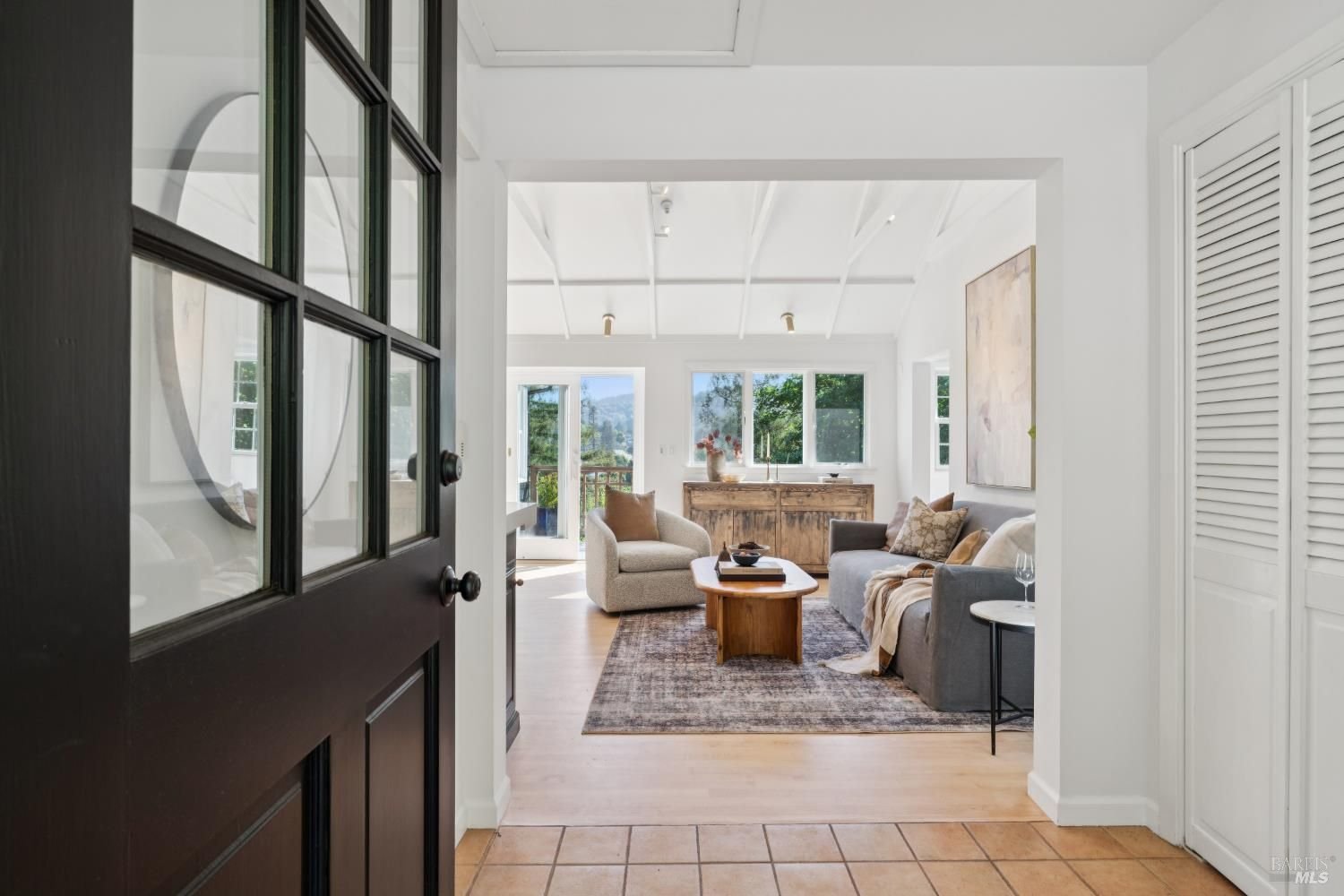
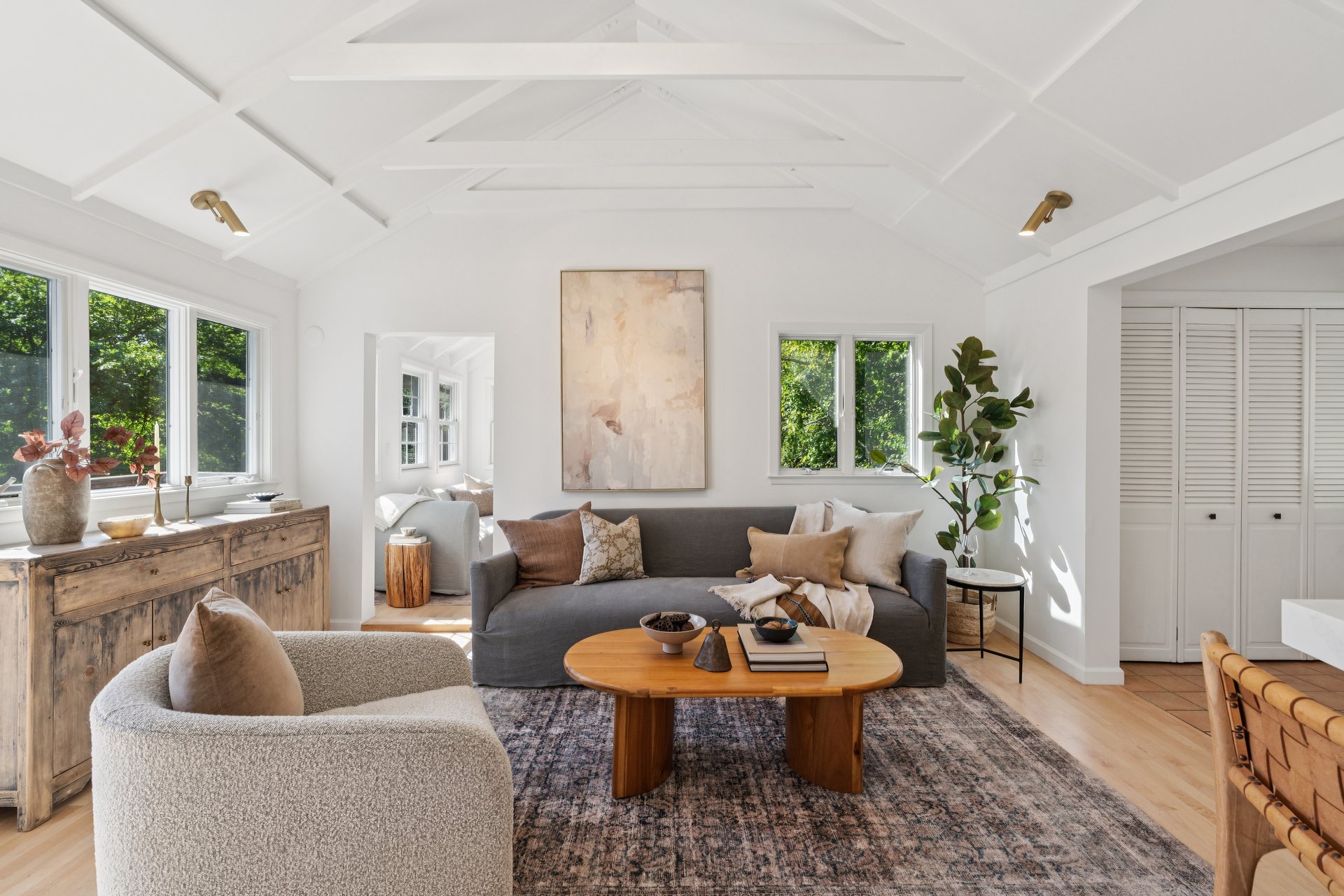
The other part is what they had been led to expect about their own house. They owned a 1903 property a short walk from downtown Mill Valley, with open beam ceilings, cathedral lines in the living room, and a view of Mt. Tamalpais that people move here hoping to find. Between the street and their front door sat more than a hundred steps.
Everyone sees the steps. That is the first thing said about this house by anyone who has ever visited, and the assumption that follows is automatic, which is that the steps are a discount waiting to be applied.
I did not think that was true. A hundred steps of separation is also a hundred steps of quiet. Nobody walks past the windows. Headlights never cross the living room at night. You do not hear voices. You climb once when you are home, and then the town is somewhere below you and the mountain is in front of you, and the rest of the day belongs to you.
For the right buyer that is not a compromise at all. For people who live the way this town lives, up the mountain early and outside most weekends, it is closer to an amenity. It is the reason they pay more, and my job was to make sure the presentation let them feel it before they started counting.
How These Sellers Came to Me
How these sellers came to me starts a long way before the house did. Our kids grew up together. We are friends, which in a town this size is ordinary, and in this business is not simple at all.
I was not their agent when they bought the place. We did not know each other yet, so they bought it with somebody else, and by the time our lives overlapped the house was already theirs and already full of children.
Which means that when it came time to sell, they had an actual decision in front of them, and nobody would have thought less of them for making it a different way. Friendship is not a reason to hand somebody your largest asset. Plenty of people quite sensibly keep the two apart.
They chose to work with me, and I was deeply honored by it. I have represented friends many times over the years, and every one of those sales has gone exceptionally well, which I do not think is a coincidence. Friendship makes me more careful rather than less. A friend's listing gets the same discipline as every other listing I take, and their trust in me creates a responsibility and standard of care like no other.
It also removes the option of softening anything. Every pre sale improvement recommendation I made to them mattered personally and professionally, so not one of them got sanded down to keep the friendship comfortable.
What I can say about where they were in their lives is this. They were heading into being empty nesters. The children were grown and gone, the day to day needs of the house had stopped matching the day to day needs of the people in it, and they were ready for something flatter and simpler. That is not a small thing to be ready for. That is a major transition. Selling a house you raised a family in is a practical transaction on paper and something else entirely in the kitchen at nine o'clock at night, and the sellers I represent best are the ones I am honest with about both halves of that.
 The Real Challenge Was Not the Climb
The real challenge was not the climb. It was that buyers decide what a hundred steps mean while they are still standing at the curb, before they have seen a single thing waiting at the top of them, and once that judgment forms in the car it is very hard to undo from inside the house.
You can update a kitchen in three weeks. You can refinish a floor, repaint an exterior, replace every fixture in a house. You cannot shorten a staircase. What you can do is change what a buyer believes the staircase is there for.
Privacy in Mill Valley is normally purchased with distance. You go further up the canyon or out toward the ridge, and you trade the walk to town for the quiet. Yet at 157 Ethel you can walk to dinner and still sit on that deck hearing nothing but birds, and the only reason both of those are true at once is the elevation those steps deliver.
The climb itself is also worth something, and in this town it is worth more than it would be almost anywhere else. Mill Valley is full of people who are up the mountain before work, loving the elevated walk and ride. The most famous staircase here has a race named after it, and people take the Dipsea Steps on a Saturday for the pleasure of it. A buyer who chooses that on the weekend does not flinch at doing something similar to reach their own front door. For an active healthy household it stops reading as an obstacle and starts reading as the thing that keeps them moving, built into the day rather than scheduled around it.
I want to be honest about the other side of it, because there is one. Groceries are real. There was no version of this sale where we talked a family with a stroller and a toddler into this house, and every hour spent trying would have been an hour taken from the buyer who actually wanted it. Everything we did had to speak to that person and to nobody else.
 The Calls I Made, and the Ones I Didn't
The calls I made on this property mattered more than the work itself, and the ones I made early mattered most. We spent four months preparing before the home was ever publicly listed, and the first thing we did was walk it together, room by room, so the sellers could see exactly where I thought their money would come back to them and where it would simply leave.
That walkthrough is the part of my job I would never hand to anyone else. Sellers are usually told one of two unhelpful things, either fix everything or fix nothing and let the buyer discount it. The answer is almost always in between, and finding it requires knowing this specific market, the comparable homes that will be open the same weekend, and the buyer pool the house will actually attract.
 The Budget Was Set Before Any Trade Showed Up
The budget was set before a single trade set foot on the property, and we finished below it. That sounds procedural. It is the least procedural thing in this entire case study, because preparation budgets almost never end where they started, and the overrun is what turns a good return into a break even.
Access is what makes that dangerous here. Every board, every appliance, and every piece of staging furniture came down those steps by hand, so identical work costs more on this property than it would on a flat lot a block away, and a change order raised in month two costs more again. Scope drift on a hillside house is expensive in a way it simply is not elsewhere, and the sellers would have been the ones paying for it.
So everything that came up after the number was set had to answer one question before it got approved. Will a buyer notice this. If the answer was no, it did not get funded, however reasonable the case for it sounded in the moment. I would rather tell a seller no on a Tuesday than hand them an invoice in month three that nobody planned for.
That discipline is worth as much to a seller as anything we bought with the money. My sellers knew what they were spending, they knew what it was meant to return, and the number did not move on them. Nobody sat through the preparation wondering whether the plan was quietly getting more expensive behind their back.
 Structure Before Anything Pretty
Structure came before anything pretty, because inspection findings are where deals die. Beetle fumigation, waterproofing repair, car deck repair, railing and fence repair, all of it went first. None of that photographs, and none of it makes a buyer catch their breath in a hallway. What it does is remove the leverage a buyer would otherwise have in week three of escrow, after they have fallen in love and their inspector has handed them a list. A seller who skips this work does not save the money. They pay it later, in a credit request, with less negotiating room and more anxiety.
 Why the Exterior Got Funded Before the Interior
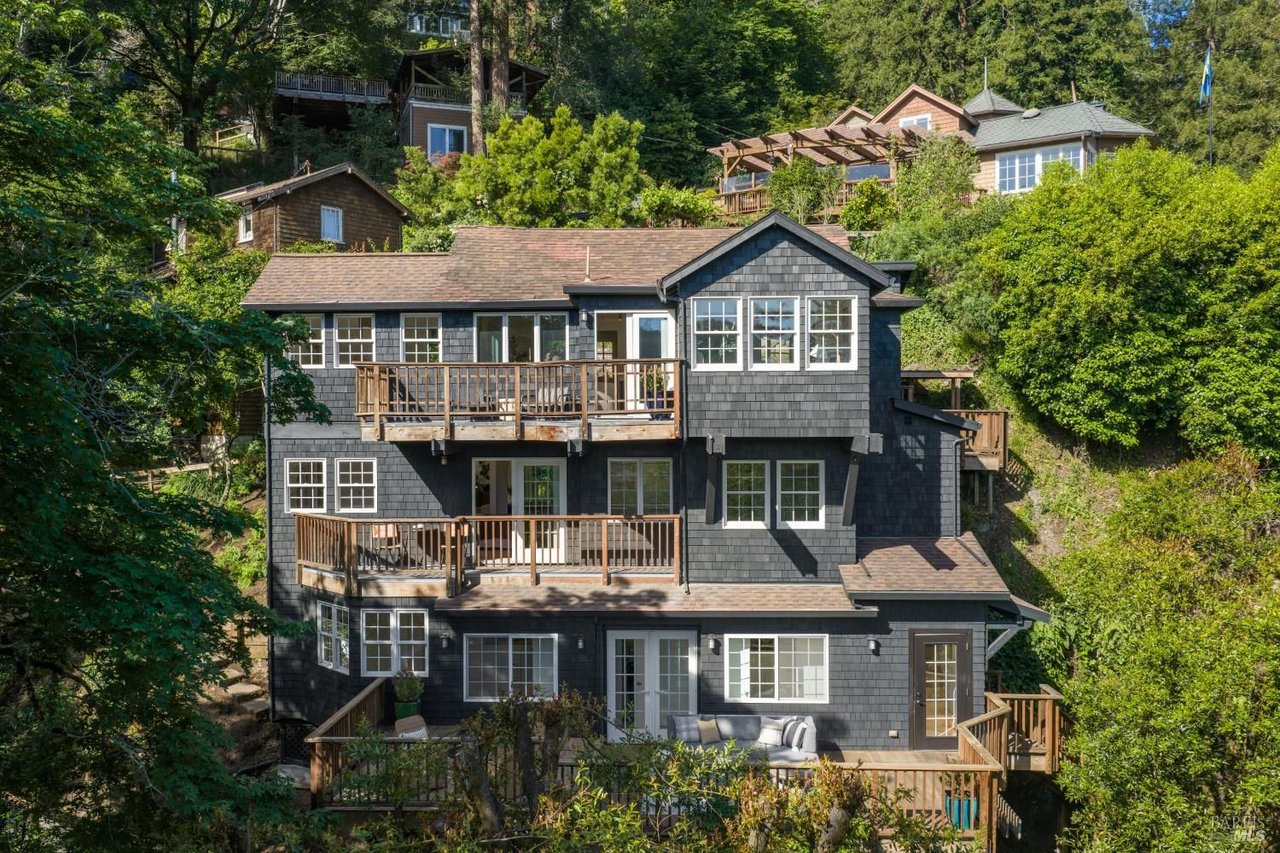
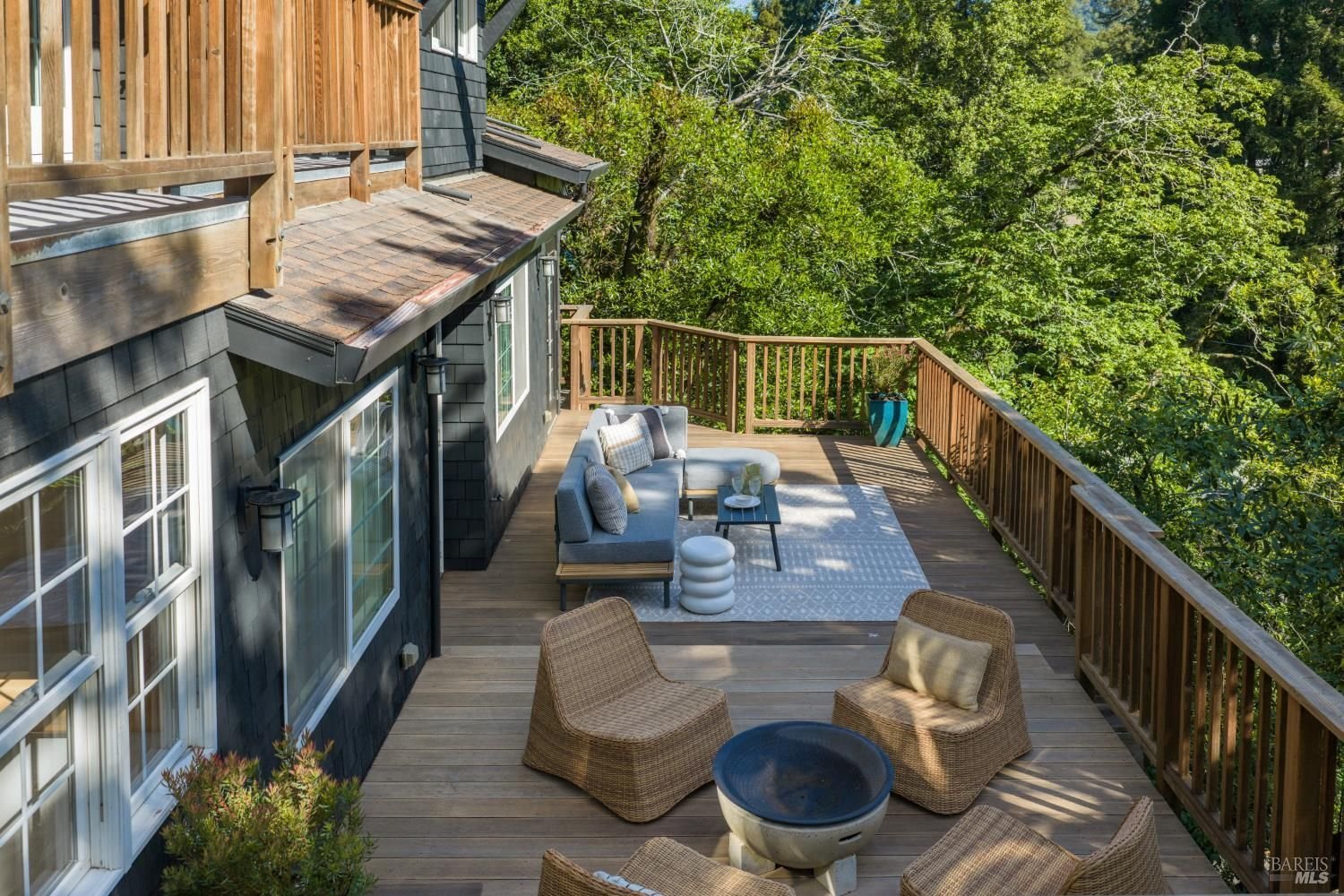
The exterior got funded before the interior because of how this house is experienced. Buyers meet 157 Ethel from the outside in, through the garden gate and down the pathway, well before anyone reaches the front door. A leaning, loose railing reads as neglect. An overgrown path reads as neglect that has been going on for a while. Sun-damaged shingles read as an old house nobody has attended to, and together the three would have undercut the story before a buyer was inside to hear it.
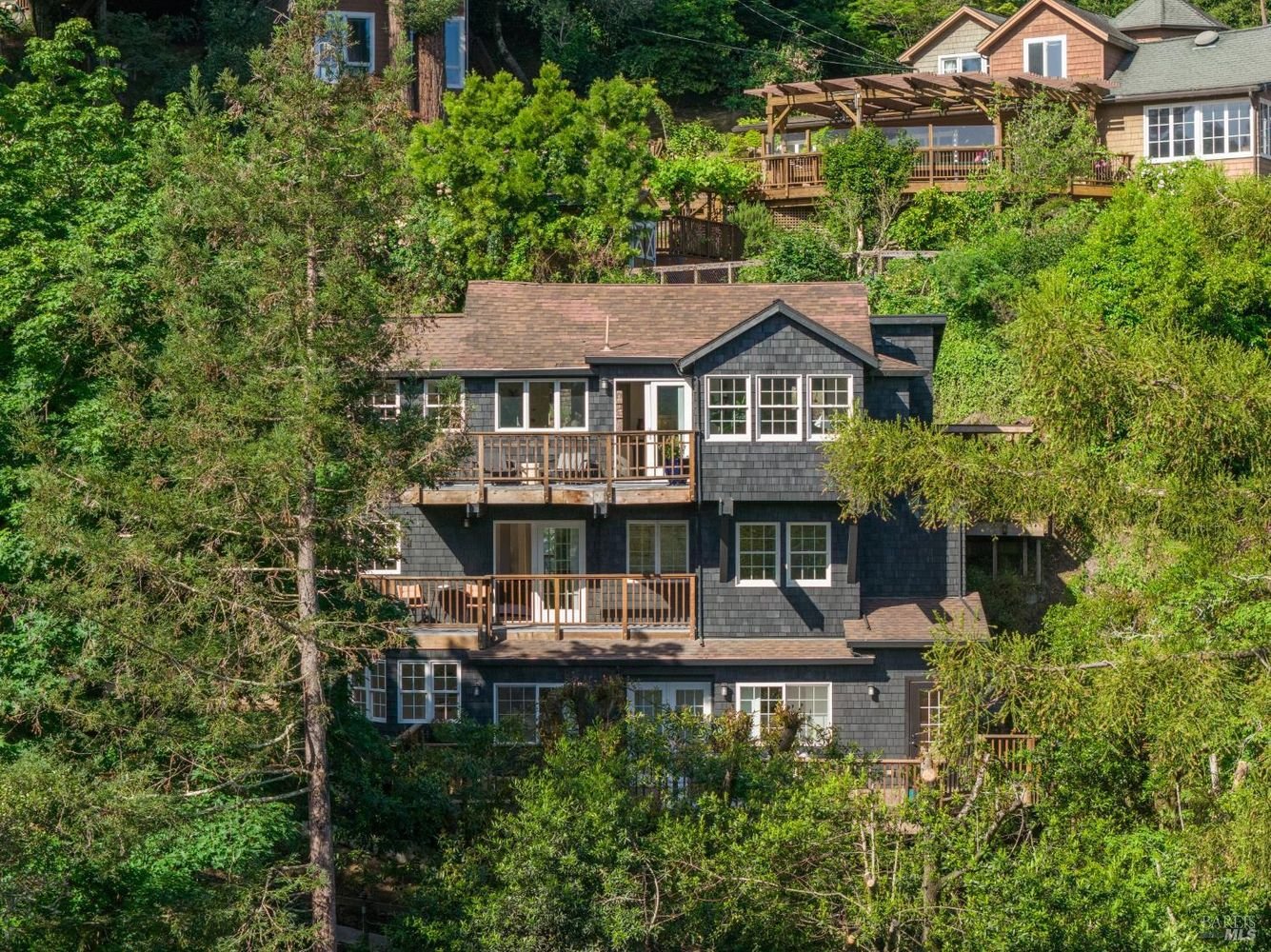
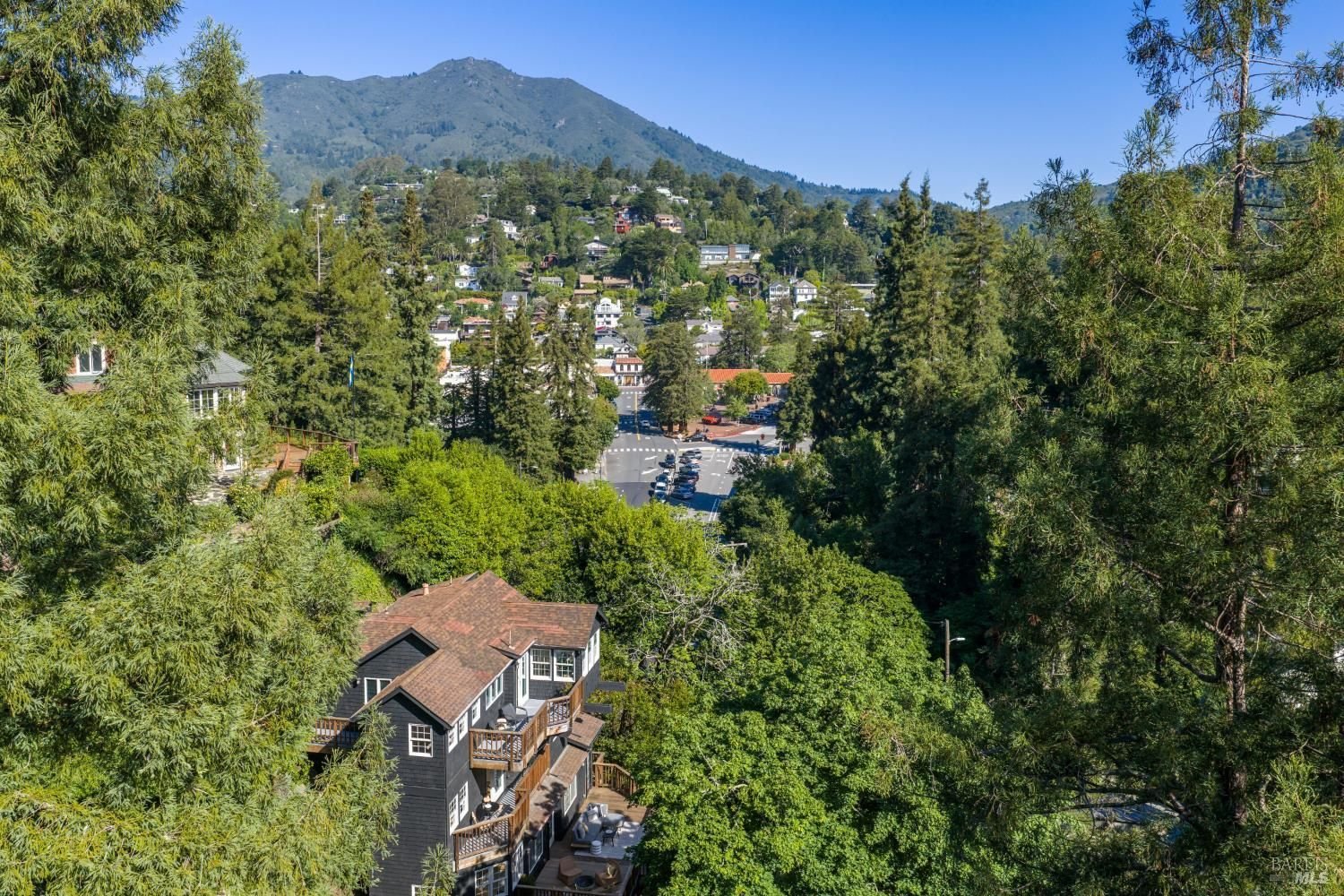
I also knew, before we spent a dollar out there, that the aerial photograph was going to carry this listing. Everything that makes the property worth the price sits above and behind the entrance, invisible from a car. That made the shingles structural to the marketing rather than cosmetic. They were the surface the lead image would be built on.
What I did not do was replace them. We power washed and repainted, and for a home whose 1903 character is the entire asset, that was the right call. Replacement would have cost several times more and quietly erased the thing buyers were going to fall for. That distinction, restoring rather than replacing, is most of what separates a preparation budget that works from one that just gets spent.
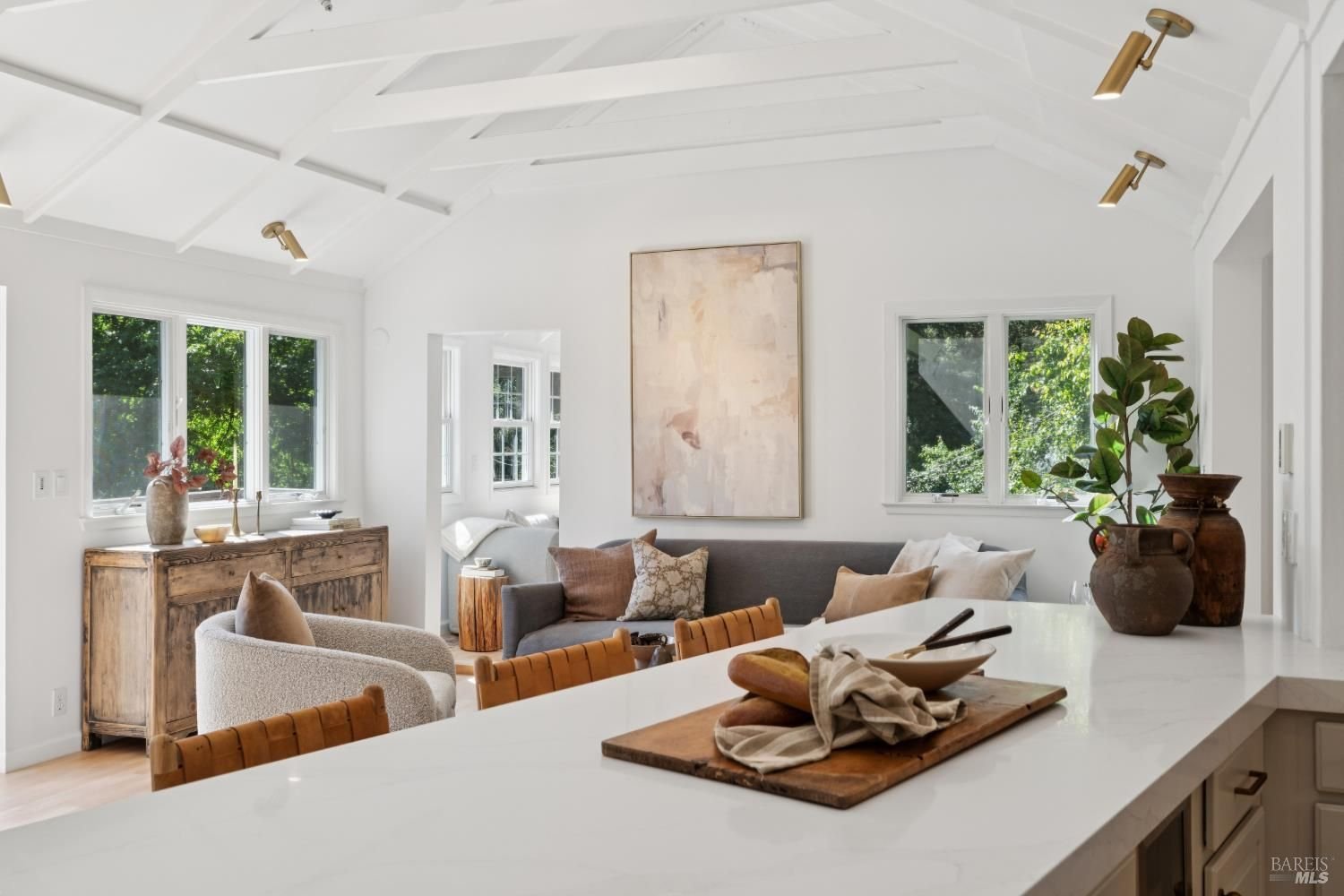
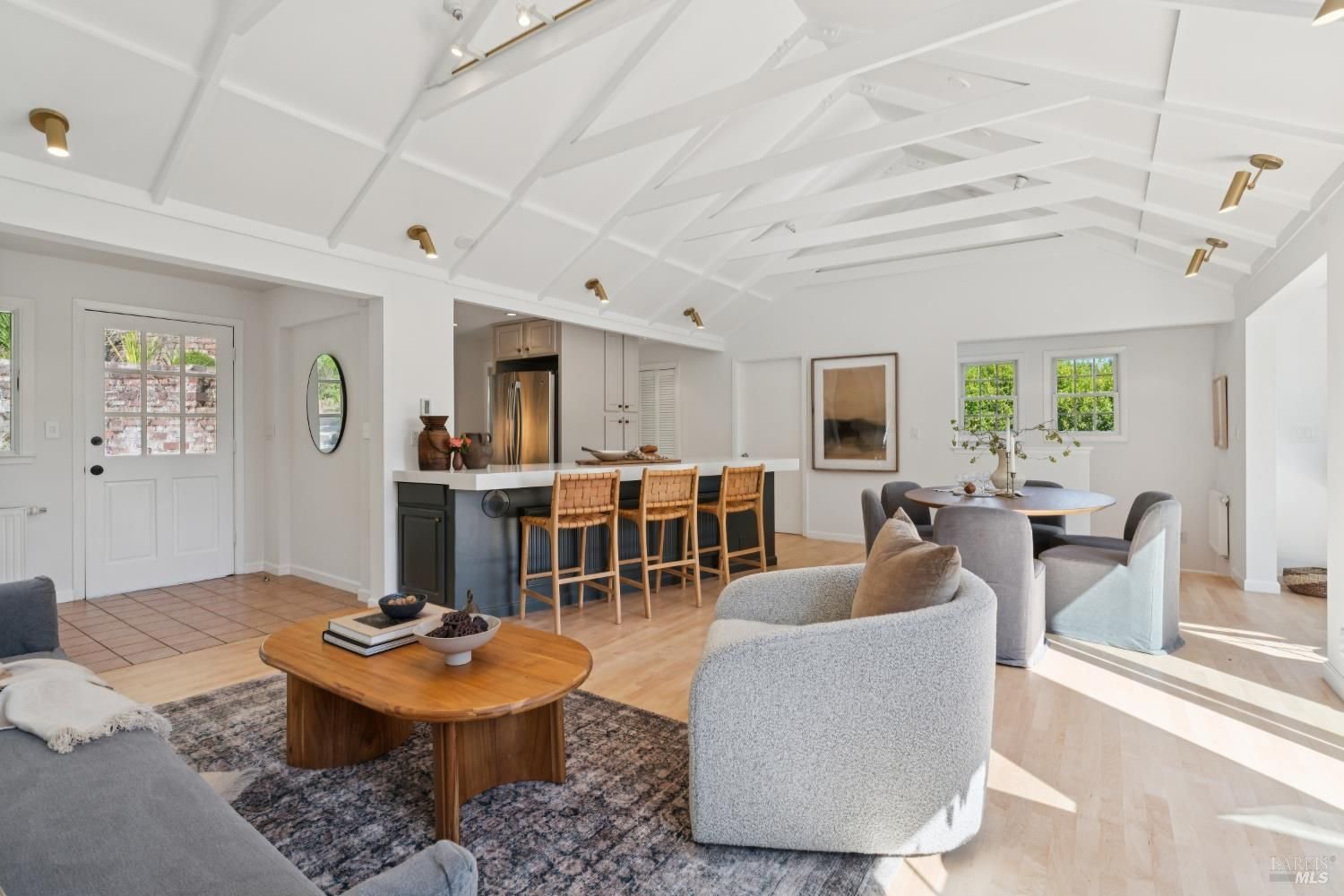
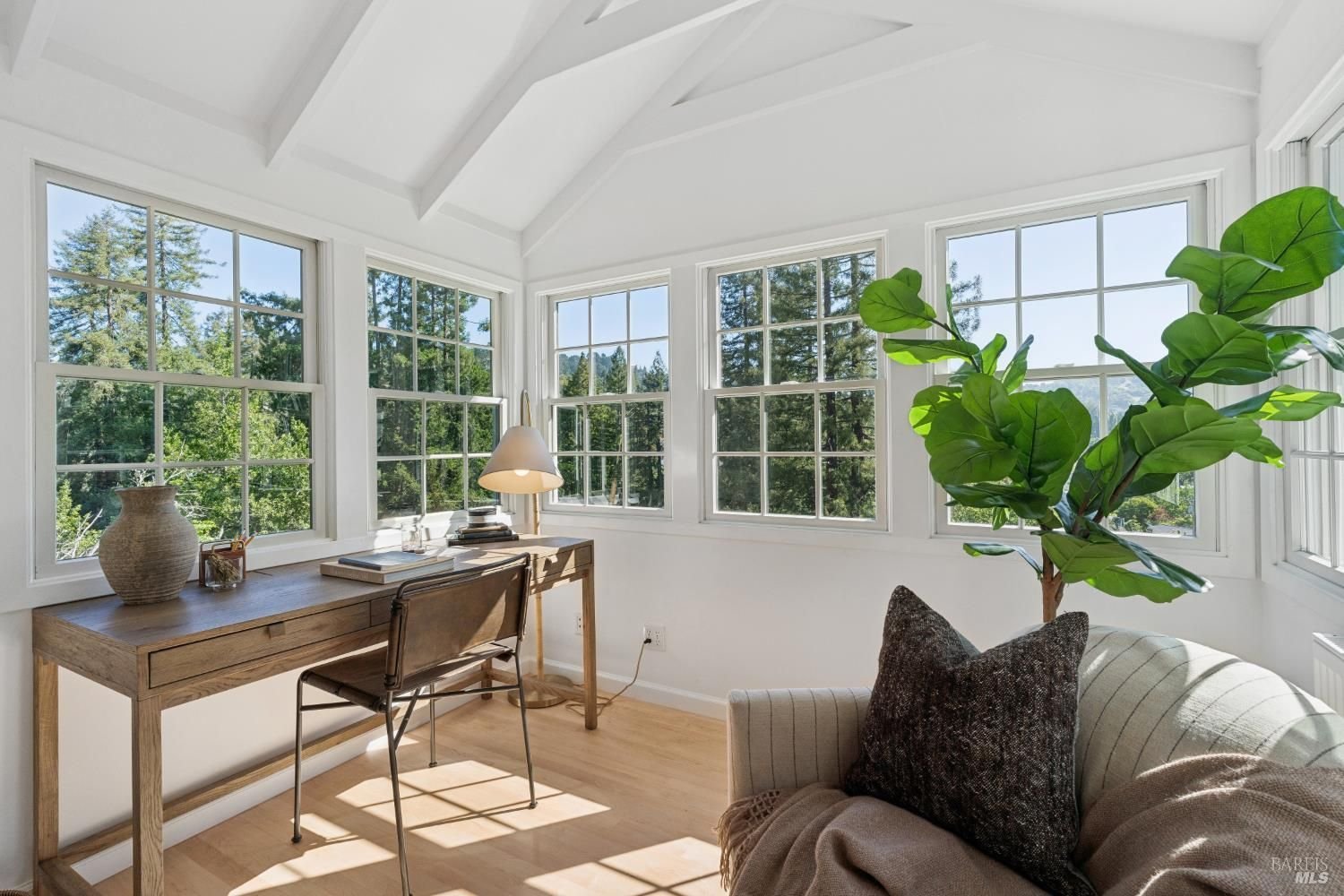
Inside, the work stayed deliberately narrow. Interior paint, refinished hardwood throughout, new kitchen counters, a handful of replacements that were visibly tired, and updated lighting. No kitchen remodel. No reconfiguration. Refinished floors and better light let the open beams and the cathedral lines read as intentional and cared for rather than simply old, and a buyer walking through does not itemize any of that. They feel that the house has been loved. That feeling is what moves a buyer from counting steps on the way up to counting what the steps bought them once they are standing at the top.
The Photography Was Planned From the Beginning
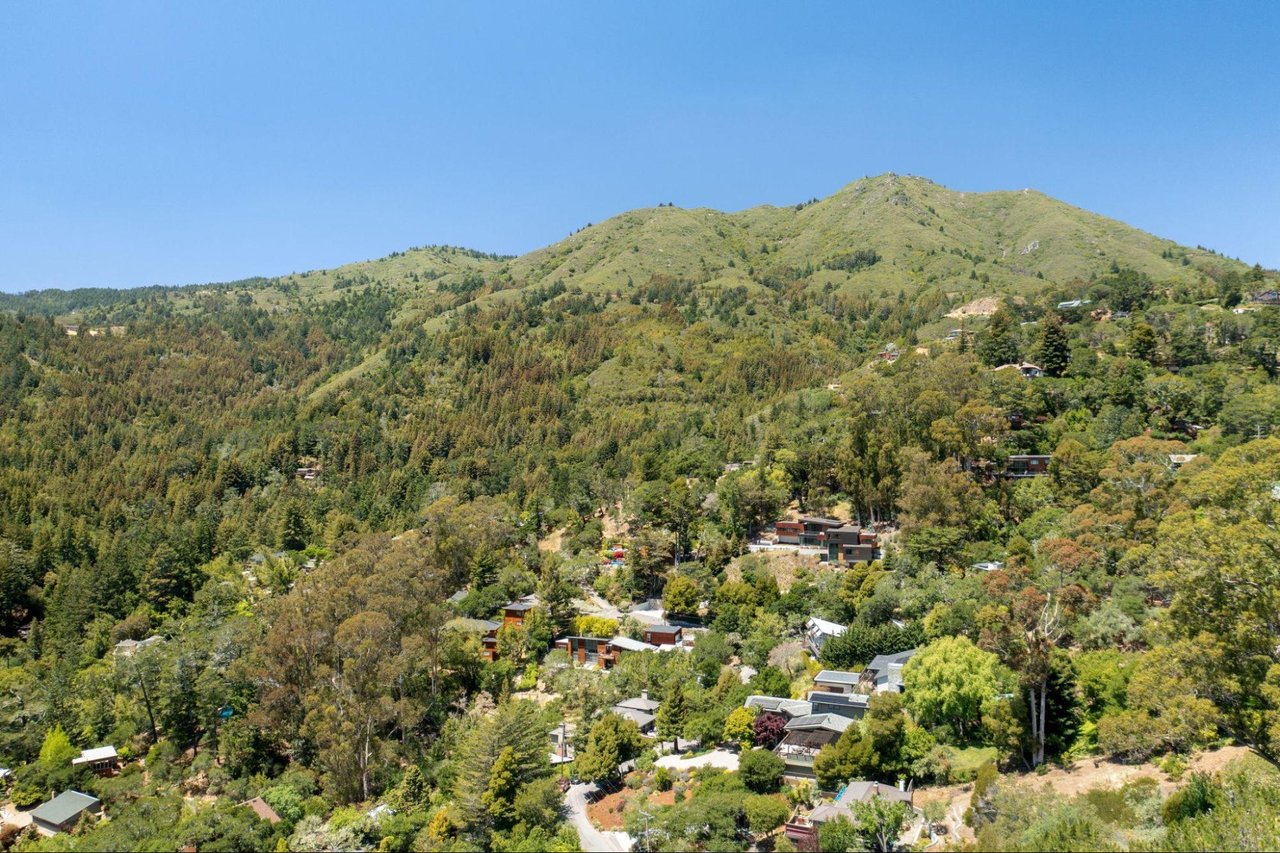
The photography was planned from the beginning, I always knew that good aerial photography would sell this home. Once the home was staged, we brought in a high-end photographer and videographer for stills, aerial footage, and video. The aerial was the only frame that holds the home, the path, the hillside, and Mt. Tamalpais in one view, which is the actual experience of living there.
This is where the exterior spend earned itself back in roughly two seconds of a buyer's attention. Freshly painted shingles photograph from above, against the backdrop of trees as one clean, continuous surface. Sun-damaged shingles photograph as streaks and blotches, and a drone finds every one of them. Nobody scrolling listings on a phone is thinking about shingle condition. They register that the house looks cared for, they slow down, and they open the gallery. That pause is the beginning of falling in love, and it happens before anyone has read a word of the description or learned there are a hundred steps.
Timing and a Price Below What the Comps Supported
Timing and a price below what the comps supported were the last two calls, and they were made together. We chose the launch deliberately, around dates likely to bring serious buyers out, rather than dropping the home into a week where it would compete with higher profile listings or land in a dead stretch of the calendar. The same house, listed two weeks apart, produces genuinely different results, and that lever gets ignored constantly.
On price, we went in below what the comparable sales supported. This makes sellers nervous, understandably, because it feels like volunteering to leave money behind. What it actually does is fill the house with qualified and interested buyers in the first days on market, when attention is at its peak and a listing either builds momentum or starts aging. When several buyers want the same home, the price stops being one person's opinion and becomes a competition, and competition has always paid these sellers better than a confident list price and an empty open house.
This Worked Here. It Does Not Always Work.
This worked here because specific conditions lined up. The house had real, rare character. The location is genuinely walkable to town. The view is the kind buyers remember a week later. There was a defined buyer pool that would read the access as privacy, and the sellers had the runway and the willingness to spend into a plan rather than a wish list.
Pricing below the comps in a market with thin demand does not create competition. It just creates a lower sale price. I would not have used that approach on a property without the character to justify the crowd it was designed to attract, and I have told sellers so.
What the Market Did
What the market did confirmed the plan rather than rescuing it. Multiple offers came in within seven days on market, and the home sold for $2,200,000, which came in 10.3% above the asking price.
For the sellers, the clean, fast transition into the next chapter, was the icing on the cake.
If You Are Sitting on a House With One Obvious Problem
If you are sitting on a house with one obvious problem, a steep lot, a hundred steps, a road nobody loves, the first question is not how to hide it. It is what that feature actually gives the person living there, because most of them give something. Steep buys you a view. Stairs buy you quiet, and for the right household they buy a daily climb that person is glad to have. A road nobody loves is often the reason the back of the lot is completely private. Name what the feature gives, find the buyer who already wants that, and it stops being a discount.
The steps at 157 Ethel never went anywhere. They are still there, and the buyer who paid the most for that house knew exactly how many there were before they wrote the offer. They were not buying the house in spite of the climb. They were buying what the climb protects.
If you own something in Mill Valley with a feature you have been told will cost you, send me the address and I will walk it with you before you spend anything. I will tell you whether that feature genuinely limits your price or is simply the thing everybody says first. Reach me at [email protected].
Frequently Asked Questions
Does a home with a lot of stairs always sell for less? No, though nearly everybody assumes it will. What a long approach genuinely does is narrow the buyer pool, and a narrow pool is a marketing problem rather than a value problem. Aim the presentation squarely at the households for whom a climb is ordinary, and the house competes for them. Market it to everyone and hope, and the stairs become the only thing anybody remembers about the listing.
How do you decide which pre-sale improvements are worth paying for? Start with anything that will appear on an inspection report or give a buyer leverage in escrow, which usually means structural, water, and safety items. Then fund whatever a buyer registers in the first thirty seconds, which is generally paint, flooring, lighting, and staging. Everything else gets questioned hard before it gets approved.
How far ahead should I start preparing my Mill Valley home for sale? For a home that needs meaningful work, three to four months is realistic. That covers repairs, updates, staging, and photography without rushing any of it. Properties on steep or difficult lots need the longer end of that range, because access slows every trade down.
Does pricing below the comparable sales actually produce a higher final price? It can, when demand is genuinely there and the preparation and marketing support it. The goal is a full house during the opening weekend, because competing buyers arrive at a number no single buyer would have offered on their own. Where demand is thin, the same approach simply lowers the sale price.
Why does exterior work matter so much on a hillside property? Because the buyer's first impression forms outside the house, and often above it. Where the approach is a path rather than a driveway, and where the listing images are shot from the air, exterior surfaces are the largest thing in the frame. Work that would be cosmetic on a flat lot is the foundation of the lead photograph on a hillside one.
Should I replace shingles or restore them? On a historic Mill Valley home, restoration is usually the better call. Power washing and repainting can cost a fraction of replacement and preserve the original character, which on a 1903 house is what buyers are paying for. Replacement makes sense when the material has failed, not when it looks tired.
Is aerial photography necessary for a Mill Valley listing? It is necessary when the setting is the selling point and the street view does not show it. Hillside properties, homes set back behind gardens, and anything with a Mt. Tamalpais view fall into that category. On a flat lot with a front-facing house, it adds very little.
What does it cost to prepare a home like this for market? It depends on scope and on access, and access is the variable sellers underestimate most. The more useful question is not what the number is but whether it holds. A budget agreed before the first trade arrives, with one clear test applied to everything proposed after that, is what separates a return from an overrun.