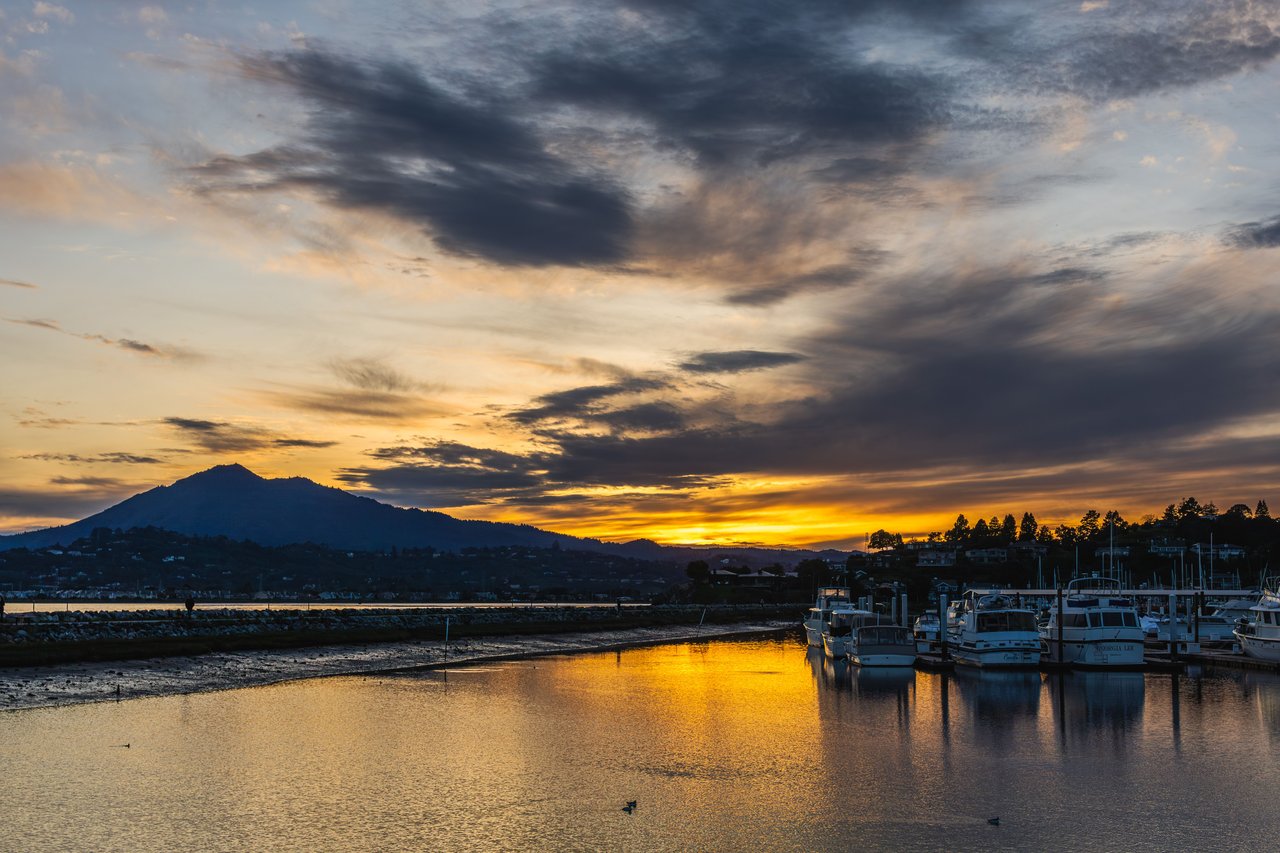
The Larkspur Ferry Terminal opened in 1976 on 25 acres. It has four ferry berths, a main parking lot with 1,800 spaces and a north lot with 215 spaces near the SMART station off Larkspur Landing Circle. On a weekday morning, parking costs $2 between 5 a.m. and 1 p.m. A 30-day permit is $20. Parking is free after 1 p.m., on weekends and on holidays when the ferry runs. You pay through ParkMobile, zone 111.
That layout is the main subject of a draft environmental impact report the Golden Gate Bridge, Highway and Transportation District released in October. The headline is more boats, with daily crossings rising from today's limit of 42 to as many as 76. Most of the report's 2026 analysis, though, covers the ground between Sir Francis Drake Boulevard and the berths. That ground is where the changes, the tradeoffs and the open questions are.
The water side is the settled part
The district has been working on this since well before the pandemic. When planning began in 2019, its study page says, average weekday ridership topped 8,000 passengers across 42 average daily crossings. Several times a week, riders were turned away by late morning because the lots were full. The pandemic stalled the effort. The Marin Independent Journal reported that the district now expects daily demand to pass 7,000 riders by 2035 and 17,000 by 2050, with about 29,000 new homes projected in Marin and Sonoma counties by 2031.
The added crossings would not all start at once. The draft report describes increasing service step by step between 2027 and 2050, depending on demand and Board approval. The district is also replacing its fleet with cleaner ferries that make less wake. Because of that, the report concludes that "ferry operations are found to have no significant impact on shoreline habitats, wetlands, or other biological resources."
The report does list three "significant and unavoidable" impacts. Every one of them is on land: construction activity, changes to the visual character of public views, and traffic on Highway 101 at Sir Francis Drake. For anyone who drives Drake past Larkspur Landing or looks across the terminal from the shoreline, those three items are the core of the plan.
What the two lots would become
The report reviewed several options and kept two. A no-project option was dismissed because it would not meet the project's goals. An option built on transit, bicycle and pedestrian improvements instead of garages was withdrawn for the same reason. Both remaining alternatives build garages on both lots. They differ mainly in the size of the main-lot structure.
| Today | Alternative 1 | Alternative 2 | |
|---|---|---|---|
| North lot | 215 surface spaces | Six-level garage, 260,000 sq ft, 850 stalls | Same six-level garage, 850 stalls |
| Main lot | 1,800 surface spaces | Five-level garage, 1.2 million sq ft, 3,998 stalls | Four-level garage, 960,000 sq ft, 3,258 stalls |
| Getting there without a car | Bus stops on Drake, SMART via Cal Park Hill Pathway | Same, plus new Larkspur Landing Circle crossing | Adds all-day shuttle, neighborhood shuttles, 350 secure bike spaces and a repair hub |
On the main lot, Alternative 1 would more than double the parking. Alternative 2 would add about 1,450 stalls to today's count. At the north lot, both plans would replace 215 surface spaces with a garage roughly four times that size. In both plans the garage ground floor would sit 1 to 5 feet above the current grade. Both include solar, electric vehicle charging, drainage and utility upgrades, and lighting designed to keep the night sky dark.
The report names Alternative 2 the "environmentally superior" option. It cites more ways to reach the terminal without driving, larger cuts in vehicle miles traveled and emissions, and a lower garage that reduces how big the project feels. Ron Downing, the district's director of planning, told the Independent Journal: "There is no project to build a parking structure at this time, no decision has been made. That will be the decision of a future board of directors."
The walk from SMART is the gap both plans try to close
The map makes the terminal look close to the train. SMART's Larkspur station is about 0.3 mile from the ferry terminal in a straight line. The draft report puts the actual walk at about 0.6 mile, by way of the Cal Park Hill Pathway, a paved multi-use trail. The report says the pathway works well for bicycles to the SMART station but "does not attract pedestrians because of its indirect route." A separate footbridge over Sir Francis Drake connects the terminal to the shops and offices on Larkspur Landing Circle. For riders who find the walk hard, SMART Connect Larkspur links the station to the terminal.
The bus picture has also changed since the district first studied this. In 2019, Golden Gate Transit shuttle Routes 25 and 31 fed the ferry. Route 31 was suspended after the Larkspur SMART station opened in late 2019. Route 25 was discontinued in 2020 and has not come back. Golden Gate Transit Route 132 from San Anselmo now serves the terminal directly. Marin Transit Routes 17, 29 and 228 stop just outside the main lot on Sir Francis Drake. As of April 2026, SMART trains run about every 32 minutes.
Both alternatives add a new pedestrian crossing on Larkspur Landing Circle to improve the link to the north lot, which is the lot nearest the train. Alternative 2 goes further. It would expand the district's Wave feeder shuttle, which the report describes as peak-only, to all-day service. It would also add up to two all-day neighborhood shuttle routes later on. According to the Independent Journal, the all-day shuttle is planned by 2035 and the neighborhood shuttles by 2050. On the main lot, Alternative 2 would add more carpool spaces on the ground floor, 350 secure bicycle spaces and a bike repair hub. The district is also considering higher parking fees.
Where Marin's elected officials land
The disagreement so far is about how much of the new ridership should arrive by car. Larkspur Councilmember Gabe Paulson sits on the boards of the Transportation Authority of Marin and Sonoma-Marin Area Rail Transit. He told the Marin Independent Journal that "expanding ferry service is a critical piece of the North Bay's climate, transit and commute goals." He also raised concerns about the parking proposals, citing cost, traffic, sea-level rise and the district's commitments:
"Adding thousands of garage stalls directly concentrates commuter vehicle trips into our local roadway network rather than dispersing them onto connecting transit."
Paulson said he wants to keep discussing bicycle and pedestrian improvements as an alternative to garages. Marin County Supervisor Dennis Rodoni, who sits on the Golden Gate Bridge district board, called the draft report a positive step. He said his preference "would be to strengthen partnerships with SMART and other transit providers, making it easier for people to reach the ferry without relying on their cars."
The commuters the paper interviewed made similar points. A San Rafael rider who takes the ferry up to four days a week called current frequency "adequate, but not optimal" and said more peak-hour runs would help. A San Anselmo commuter asked for later evening departures from San Francisco and for shuttles connecting the Ross Valley to the terminal. That second request lines up closely with Alternative 2's neighborhood shuttles.
How to comment before December 7
The district held a public meeting on November 5 at the Larkspur Library, 10 Rose Lane. Comments on the draft report are open until December 7, 2026, according to the district's study page. There are three ways to send one:
- Use the comment form on the district's study page.
- Email [email protected].
- Call (415) 257-4493.
The full draft, dated October 19, 2026, is posted on the district's project documents page. It includes an executive summary, eight chapters and appendices A through G.
Sharon Kramlich has worked in Southern Marin for decades and follows planning at Larkspur Landing closely. She is glad to talk through what changes near the ferry could mean for a home in Larkspur, Greenbrae or Kentfield. When you're ready, Sharon Kramlich can provide a Complimentary Home Evaluation.