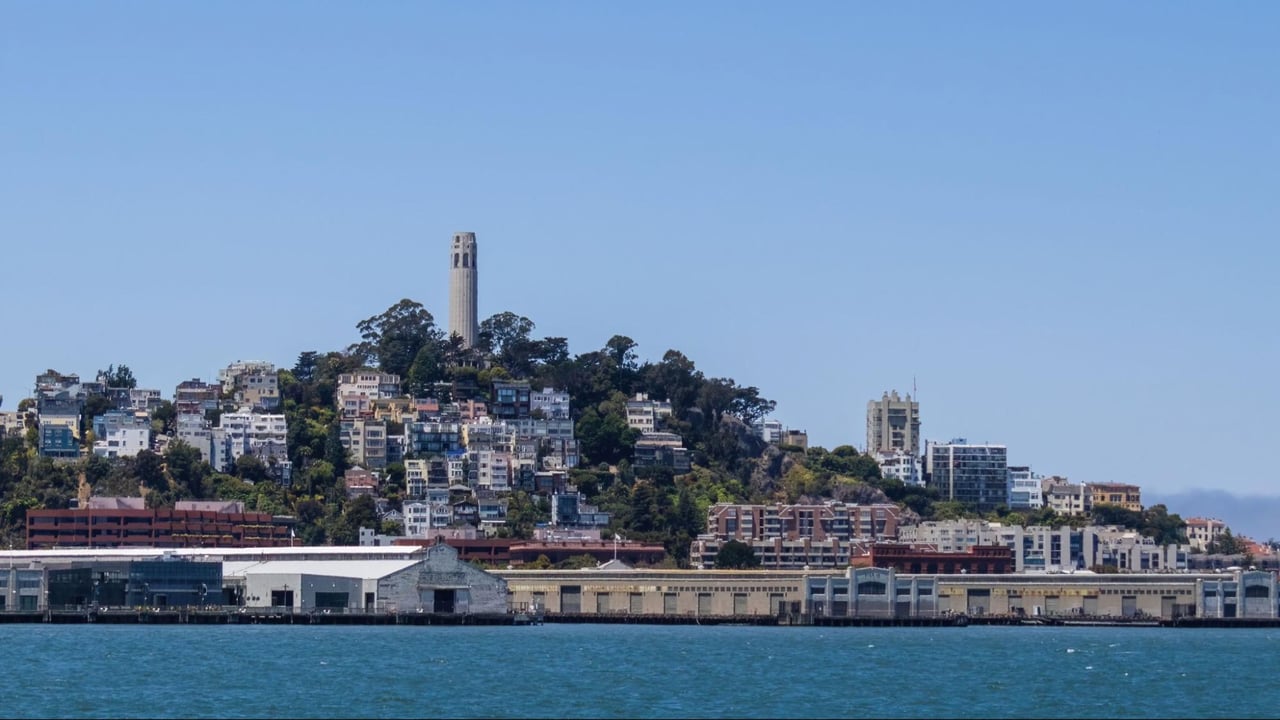
Why I Left Telegraph Hill for Mill Valley
I tell clients all the time to slow down. To separate what they feel from what they know. To look at the inspection report before they look at the light coming through the kitchen window, and to be honest with themselves about whether they're buying a house or buying a feeling.
I'm going to tell you how I bought my own home. I did almost none of that.
What I Was Leaving
What I was leaving was a condominium on Telegraph Hill, on the top floor of a two unit building, and I loved it completely. I'd started my real estate career in San Francisco in 1993, and by the mid to late nineties the city was where my whole life lived. My friends, my work, my community, all of it was there. I wasn't looking to leave, and I want to be clear about that, because the story doesn't work if you picture me restless in the city and quietly hoping for something else to come along.
I wasn't waiting for anything. Just happy.
The Drive Back From Tahoe
The drive back from Tahoe is where this actually starts, though Mill Valley itself was not new to me.
I'd known this town for years and loved it. I'd spent time here, hiked Mount Tamalpais, and always felt drawn to it in a way I couldn't have explained if you'd asked me to. It felt like home well before it was. It was a different town then, with far fewer young families and far fewer large homes than you see here today.
In 1999, my husband at the time and I were driving back from a weekend in Tahoe, and on the way home, more or less on a whim, we decided to cut through Mill Valley and look at a couple of houses.
There was no plan, no pre-approval in place, no conversation about moving. We didn't have children yet, so no school question was driving it and there was no space problem to solve. It was a Sunday, we were in the car, and it seemed like an interesting way to spend an hour.
We walked through two homes on Lovell Avenue, my favorite street in town. We fell in love with the second one we viewed. That was the entire decision. It took an afternoon.
What Actually Got Me
What actually got me is something I've thought about a great deal in the years since, partly because I now spend my working life asking other people to examine the same impulse.
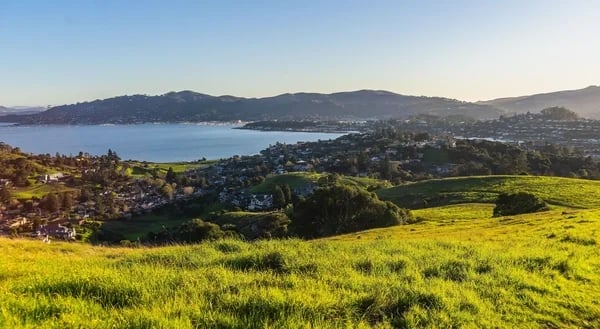
It was the light. I'd spent three months of every San Francisco summer wrapped in fog, which I'd never once complained about, because that's simply what the city does. Then I stood outside my home in Mill Valley and the air itself felt different. Open. The sky was actually blue, with fingers of fog stretching over the distant ridgeline. The birds were chirping. The sky was dynamic. The air felt fresh and alive.
It was the mountain sitting right there. The privacy. The trees. The quiet, which isn't silence, because Mill Valley has plenty of sounds of its own, but a kind of settling I felt the moment I stepped out of the car.
Dreamy is the word I keep coming back to, which is not a word that belongs anywhere near a real estate decision, and it's the honest one. The sheer beauty of the surrounding nature captured my heart.
Here's the Part Where I Contradict Myself
Here's the part where I contradict myself. Everything I just described is emotion. Pure feeling, almost no analysis. Heart, and very little logic.
Helping clients see past exactly that is a good part of what I do. Not to dismiss the feeling, but to talk through the logic sitting underneath it, the parts that genuinely matter, the details they need to recognize before they commit to anything.
Have they actually driven the commute, or only estimated it? What does the driveway look like, the stairs, the road in a January storm? How does the house sit through the day, morning against afternoon, and what happens to that hillside in December? I tell people, sometimes bluntly, that the home they've fallen for isn't the right purchase, and I've talked buyers out of houses that they initially thought they wanted badly.
So how do I hold both of those things at once?
What I've Come to Believe About It
What I've come to believe about it, after more than 30 years of watching people buy homes, is not a technicality.
Emotion isn't the enemy. Emotion is the point. If a home doesn't move you, you shouldn't buy it, because you're going to live inside this decision for years and a spreadsheet won't carry you through a stormy, windy Tuesday in February when the power is out. Every genuinely happy homeowner I've worked with felt something.
The feeling itself is fine. What gets people into trouble is asking it to answer questions it was never equipped to answer.
I don't think what happened to me was luck, though I want to be careful about how I say that. I'd been coming to Mill Valley for years by then. I'd hiked the mountain, spent time in the town, and paid attention to it the way you pay attention to a place that pulls at you without your knowing quite why. So when I stood on Lovell Avenue that Sunday, I wasn't responding to a town I had just met. I was recognizing one I already knew. That's usually what intuition turns out to be, a great deal of accumulated information arriving faster than you can explain it.
And then I did the work. After we fell in love, I stepped back and went through all of it in depth: the location, the commute, the values, the upside, the downside, the schools. My heart was already there, and I want to be honest that it was. The analysis confirmed what my heart had decided, and it needed to, because feeling strongly and being right are not the same thing. Watching this market since 1999 has shown me plenty of people who skipped that second part and didn't land as well.
Falling in love with Mill Valley told me something true about how I wanted to live. It couldn't tell me whether that specific house was structurally sound, or fairly priced, or on a street that holds value, or in a school boundary that would matter enormously to me a few years later when I had three children moving through Mill Valley's public schools. Those are different questions, and feeling strongly doesn't answer them.
What I do for clients now isn't talk them out of loving a house. It's making sure the love is pointed at the right thing, and that everything the love can't evaluate gets evaluated by someone who can.
The Part Nobody Talks About
The part nobody talks about is everything that came after that afternoon on Lovell Avenue. Falling in love took a moment. The rest of it took most of a year, and it gets left out of every version of this story I've ever heard anyone tell, including mine.
I didn't sell the condo first. I took a bridge loan so we could buy before selling, which is what allowed us to move on the Mill Valley house without waiting for the Telegraph Hill sale to line up behind it. We closed in February and went straight into a remodel. During the remodel I prepared the Telegraph Hill condo for market. It sold by May. We negotiated a rent back and stayed on past closing, and we finally moved into the Mill Valley house in late July.
That sequence is the whole game when you're buying in one market while selling in another. You typically need the equity from the sale to fund the purchase, but the purchase won't wait for you, because a home you want is a home other people want. A bridge loan is one way through it. There are others, and the right one depends entirely on what you can carry and for how long. What it requires is planning, honest conversation, and someone who has done it before and isn't learning on your transaction.
I was genuinely sad to give up our Telegraph Hill home. Those Bay views were extraordinary, and I knew I wasn't getting them back. The trade was a good one and I'd make it again, and I still felt the loss of it.
I was nervous too. I was leaving friends, a community, and the city that had shaped my entire professional life. That nervousness isn't evidence you're making a mistake. Usually it means you understand exactly what you're giving up.
Since 1999
Since 1999, I've owned that same house on Lovell Avenue, and I adore it every bit as much now as I did the day we saw it.
I raised three children in it, through Mill Valley's public schools. I've hiked Mount Tamalpais from it more mornings than I could count, with my dogs, sometimes before the rest of the town is awake. I learned this town the way you only learn a place by living in it: which canyons stay cold through the winter, how sound carries, which neighborhoods catch the afternoon sun, which blocks feel like the heart of something and which feel like the edge. That knowledge is the foundation of everything I do professionally now, and I didn't acquire it deliberately. I acquired it by being here.
I feel so much for this town that it's sometimes hard to put into words.
Mill Valley is not where I ended up. It's where I belong.
What I Take From It Into My Work
What I take from it into my work starts with this: every time I sit down with a buyer who's falling for a house, some part of me is standing on Lovell Avenue in 1999.
I know exactly how it feels when a place captures your heart. I'm not going to pretend I've never been that person, and I'm not going to be the agent who treats that feeling as a problem to be managed.
What I am going to do is make sure the feeling isn't the only thing in the room. That someone has looked hard at the condition, the pricing, the street, the sun, the access, and everything else that will still be true long after the first thrill has settled. None of that works against buying with your heart. It's what makes buying with your heart hold up over the years you actually live there.
If you're somewhere in the middle of this yourself, on either side of the bridge, the conversation worth having is the one about sequence, and it should happen before you fall for anything. Tell me what you own, what you're carrying, and when you want to be moved in. I'll walk you through how the two transactions have to line up, what a bridge loan does and doesn't solve, and what it realistically takes to hold it all together. Reach me at [email protected].
FAQs
Is it a mistake to buy a home emotionally? No, and I'd be suspicious of any home you feel nothing about. The mistake is letting emotion answer questions it can't answer. Condition, pricing, resale, sun exposure, access, and school boundaries all require analysis. The feeling tells you whether you want to live there. It can't tell you whether the purchase is sound.
How do you buy in Marin while still owning a home in San Francisco? It comes down to sequencing. You typically need the equity from your sale to complete the purchase, but competitive properties won't wait for you. A bridge loan is one common answer, and it's the one I used myself in 1999, buying in Mill Valley first and putting my Telegraph Hill condo on the market while the remodel was underway. It let me move on the house I wanted without asking the seller to wait for my sale. It also means carrying two properties for a period, so it has to be planned rather than improvised. There are other structures, and the right one depends entirely on your finances. This is a conversation worth having early, well before you find a house you want.
What should I check before committing to a home I've fallen for? See it at different times of day, and on a weekday as well as a weekend, because morning and afternoon can be completely different houses and so can a Tuesday and a Sunday. Drive the actual commute at the actual hour. Walk the access, the stairs, the driveway, and think about all of it in January rather than June. Then read the disclosure package properly, and get your own inspections if anything in it looks thin.
How is living in Mill Valley different from San Francisco day to day? The light, most of all, and the absence of a socked in blanket summer fog season. The tradeoff is a bridge between you and the city, and that tradeoff is real. It's worth being honest with yourself about how often you'll actually cross it.
Did you know Mill Valley before you moved there? Yes, well before. I'd spent time here for years, hiked Mount Tamalpais, and always felt drawn to the town. What I hadn't done was plan to move. We cut through on a whim on the way back from Tahoe in 1999, walked through two homes on Lovell Avenue, and bought one of them. The town wasn't a discovery. The decision was.
Do you still live in the same house? Yes, on Lovell Avenue since 1999, and I still love it just as much as the day we saw it.
Was it hard to leave San Francisco? Yes. I was nervous about leaving my friends, my community, and the city where my career began, and I was genuinely sad to give up the Bay views from Telegraph Hill. That nervousness is normal and it isn't a sign you're making the wrong choice. I've never once regretted the move.