I want to be careful about how I say this, because I have deep respect for the agents I know in San Francisco. I started my own career there in 1993, and some of my closest professional relationships are still on that side of the bridge. Many of them send me their buyers, and I'll come back to why that matters.
But I have watched the same thing happen too many times to stay quiet about it. A buyer from the city finds a home in Mill Valley. Their agent, who has served them well in San Francisco, comes across the bridge to represent them. And the buyer ends up paying significantly more than they needed to, or losing homes they should have won, or discovering something about the property six months in that a local agent would have flagged on the first walkthrough.
This is not a competence problem. It is a market problem. Marin does not work the way San Francisco works, and the gap between the two is much wider than it looks from the outside.
The list price does not mean what you think it means
This is the single most expensive misunderstanding, and it costs buyers real money.
In Mill Valley, a home is frequently listed intentionally below what the seller and the listing agent believe it is worth. That is not an accident or a mispricing. It is deliberate strategy, and it works. Pricing slightly under value brings more buyers through the door in the critical first days on market, and when several buyers want the same home, competition sets the final number rather than one buyer's opinion. I have used this approach repeatedly. At 157 Ethel Avenue, the home was listed intentionally under its assessed value and sold for 10.3% over asking with multiple offers in seven days.
Now consider how that looks to an agent who works primarily in San Francisco, where list price behaves differently depending on the local market conditions at the time. Currently the AI boom is driving prices shockingly above their list price. So, often times, the SF agent will treat the MV list price as a starting point in a familiar way and advise their buyer to write an offer far above what the competitive picture actually required. At other times, when the SF market has been quite slow, I see SF agents advising their buyers to offer close to list price only, again missing the market completely.
Both outcomes are expensive. The first one is the one I see most.
I see this pattern repeatedly, and it is always expensive
I want to be specific about what I actually observe, because this is not a theoretical concern.
Over and over again, I see homes in this market sell for far more than they should have, and when I look at who represented the buyer, it is an agent from San Francisco. Not once or twice. It is a pattern I have watched play out for years, and it is consistent enough that I can often predict it before the sale closes.
The mechanism is straightforward once you understand it. An agent who does not work here every week has no reliable sense of where the ceiling is on a given property. They have no accumulated memory of how thirty comparable situations resolved over the last two years. They cannot tell the difference between a home that will draw eight offers and one that will draw two. So when their buyer says they want the house, the only safe advice available is to bid high, because bidding high is the only strategy that does not require knowing the market.
That is a rational response to being unfamiliar. It is also how buyers end up paying two hundred thousand dollars more than the situation called for and never finding out.
The buyer rarely learns this. They won, they are happy, and nobody has any reason to tell them what the property would have gone for with local representation. That is until they go to sell the property and they learn at that time that they overpaid.
Marin homes are valued on different inputs
An agent who works in San Francisco has trained their instincts on a specific set of variables: neighborhood, block, floor, light, views, HOA, parking, walkability, condition. Those instincts are genuinely good, and they transfer poorly.
Here is a partial list of what actually moves value in Mill Valley, and how much of it has no meaningful San Francisco equivalent:
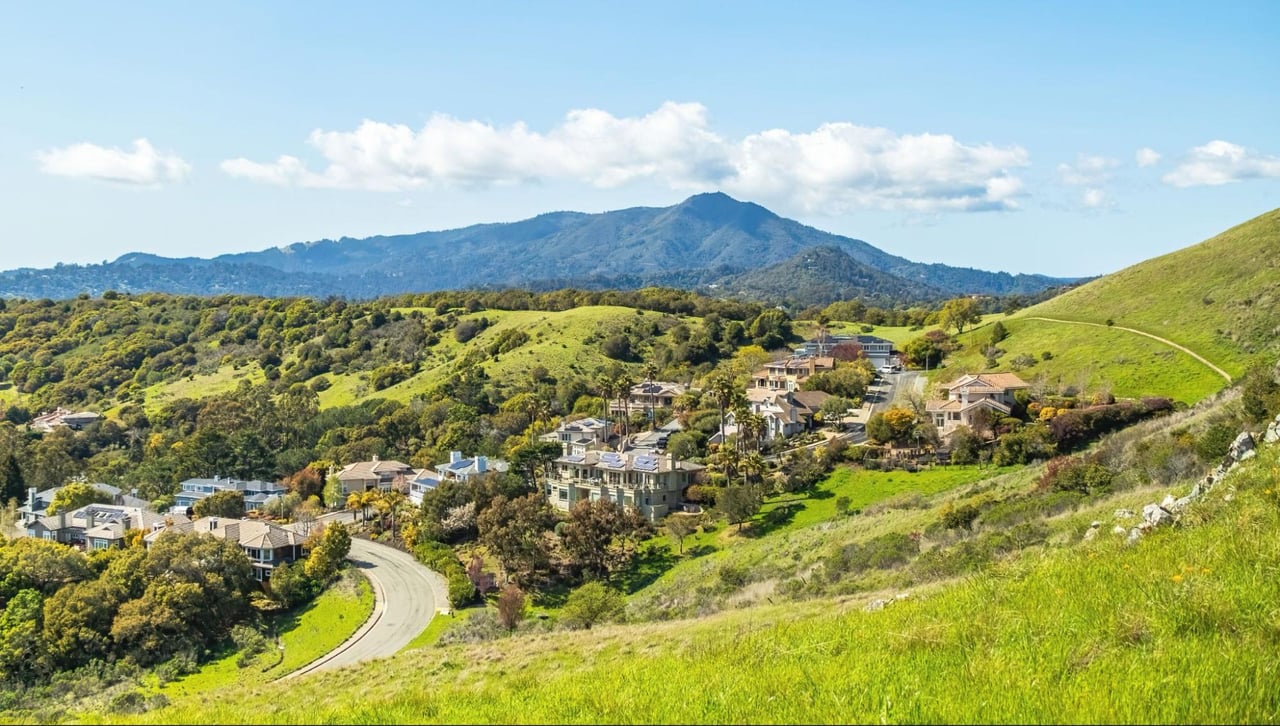
Sun. Our canyon/hillside geography means two streets a five minute walk apart can have dramatically different light. Some pockets get beautiful afternoon sun year round. Others sit in shade for much of the winter. I have watched buyers fall in love with a house in October and be genuinely unhappy by February. There is no version of this in the city, and there is no way to know it from a listing photo. You learn it by walking these streets for years and understanding the topography.
Access and grade. A steep driveway that feels charming in October feels different in January, and it affects both daily life and long term resale. So do stairs. 157 Ethel Avenue had more than 100 steps between the street and the front door, which is a real characteristic that has to be priced and marketed honestly.
Fire risk, defensible space, and insurance. This is now a central factor in Marin and it is changing quickly. Whether a property has defensible space, what the vegetation situation looks like, how the home is positioned relative to the hillside, and what it will actually cost to insure are questions that materially affect what a home is worth. An agent who does not work here every week is not tracking how those answers are shifting.
Hillside specifics. Drainage, foundation condition, retaining walls, standing water, sump pumps, sewer laterals, septic systems, dry rot in a wet canyon. These are ordinary considerations for anyone who works Marin regularly and easy to underweight if your reference points are city buildings.
School boundaries. Attendance is tied to specific addresses, and the boundaries are not always where you would expect. Families routinely discover this after they are already in contract. I can tell you which school any given address feeds into, and for families with children at a transitional age that single fact sometimes changes the entire search.
Which streets are genuinely desirable, and which merely look it. This is the accumulated knowledge that never appears in any data set. Which canyons stay cold. Which blocks feel like the heart of a neighborhood and which feel like the edge. Which flat stretches are rare enough to command a premium.
None of that is on Zillow. Most of it is not in the MLS. It lives with the people who are here.
You will not see everything that is available
A meaningful share of what trades in Mill Valley never reaches a buyer's search alert in a form they can act on quickly, and some of it never reaches a public listing at all.
Homes come to market through relationships. A listing agent mentions to a few people they trust that something is coming in three weeks. A seller who is not ready to be public asks around quietly. A property being prepared for spring gets discussed at a broker tour in January. Those conversations happen among agents who are in this market constantly and who know each other well.
An agent who works primarily in San Francisco is not in those rooms. Not because anyone excludes them, but because presence is the whole mechanism. If you are not here every week, you are not in the flow of information, and your buyer sees only what everyone else sees, at the same moment everyone else sees it, in a market where the first days on market decide the outcome.
That is a real cost, and it is invisible to the buyer. You cannot miss what you never knew existed.
Offers here are written differently
Price is one variable among several, and in a competitive Marin situation it is frequently not the deciding one.
When I am representing a seller with multiple offers in hand, I am reading the entire structure. The strength of the financing. What is contingent and for how long. The deposit. The close date and whether it fits what my seller actually needs. Whether the buyer's agent is someone I know and trust to hold the deal together through escrow, or someone I expect to renegotiate at day twenty one over an inspection item that was in the disclosure package the whole time.
That last one is worth sitting with. The relationship between the two agents is part of the offer, whether or not anyone says so out loud. I have occasionally advised sellers to take a lower offer because the terms and the representation on the other side made it the stronger, safer deal. That is not favoritism. It is smart negotiating on behalf of the sellers, which is my job.
An agent from outside the market writes a technically sound offer that reads as unfamiliar in a stack of local ones. Their buyer never learns why they lost.
The best San Francisco agents already know this
Here is the part I most want people to hear, because it is not a criticism of anyone.
The strongest agents I know in San Francisco refer their Marin buyers to me or other local agents. Not occasionally. Regularly. They call me for market reads, and when a client of theirs is genuinely crossing the bridge, they hand off rather than follow. They do it because they understand that the professional thing is to put their client with someone who knows the market inside and out, and because a client who is well served stays a client for life regardless of who wrote the contract.
That is what good representation looks like. It is a real win for everyone involved. Their buyer gets local expertise, the relationship survives, and often it comes back around when that buyer's parents sell in the city or their sibling moves back.
So if you are working with an agent in San Francisco whom you like and trust, the conversation to have is not whether to leave them. It is to ask them directly what their experience is in Mill Valley specifically, and how they would handle the things above. A good agent will tell you honestly. Many will offer to refer you to a local agent before you finish the question.
What this actually costs
The stakes are not abstract. In a market where a well positioned Mill Valley home routinely draws multiple offers and closes above asking, the difference between local representation and out of area representation shows up as real money and real regret.
On the high side, it looks like overpaying by a significant margin because nobody could tell you where the real ceiling was. On the low side, it looks like losing five homes in a row and slowly concluding the market is impossible, when the actual problem was how the offers were built. In the middle, it looks like buying a beautiful house on a street that sits in shade from November through February, or with a driveway you come to dread, or with a drainage issue that you did not understand, or in a school boundary you assumed was different.
None of those outcomes announce themselves at the time. That is what makes this worth saying plainly.
If you are crossing the bridge
I have made this move myself. I left a home on Telegraph Hill more than 26 years ago, and I have spent every year since learning this town the way you only can by living in it.
If you are starting to look seriously in Mill Valley or Southern Marin, I welcome a direct conversation, whether or not you end up working with me. And if you have an agent in the city you care about, bring them into the discussion with me. The good ones will thank you for it.
Frequently Asked Questions
Can my San Francisco agent legally represent me in Marin County?
Yes. A California real estate license is valid statewide, so there is no legal barrier. The question is not licensing, it is local market knowledge, relationships, and daily presence in a market that operates on different mechanics.
Will I offend my agent by asking about their Marin experience?
A good agent will not be offended. They should answer honestly, and many will suggest a referral themselves. Agents refer clients across markets constantly. It is normal, professional, and expected.
What should I actually ask them?
How many transactions have you closed in Mill Valley in the last two years? How do you read list price here versus in the city? How would you evaluate sun exposure, fire risk, and school boundaries on a specific address? Do you know the listing agents in this market? What can you tell me about the local market in general. The answers will tell you quickly.
Isn't a buyer's agent paid by the seller anyway, so what does it cost me to use my city agent?
Compensation structures have changed and vary by transaction, but that framing misses the real cost. The expense of out of area representation is not the commission. It is overpaying, losing homes you should have won, or missing something about a property that a local agent would have caught before you were committed.
What if I want to keep my San Francisco agent involved?
That works well and I do it regularly. A referral arrangement keeps your relationship with your city agent intact while you get local representation for the purchase itself. Or both agents team up. Many of my buyers came to me exactly this way.